Travel Agency Website in Osh: A Teardown From a Live Example
A travel agency website in Osh sells tours across Kyrgyzstan and neighboring countries — a business where the decision to buy is almost always made after a short conversation or chat exchange. People scroll through several sites in a row, comparing destinations and prices, and the first impression forms in seconds.
The site is built on WordPress — a reasonable choice for a travel agency: a flexible system that's easy to manage on your own. The question isn't the platform, but how it's set up and what a visitor sees when they land on the site from a phone or a link a friend sent them.
We ran the site through a technical audit and looked at it through the eyes of someone searching for a tour to or from Osh. Below is what we found and why it matters specifically for a travel agency, not abstractly 'for a website.'
As it is
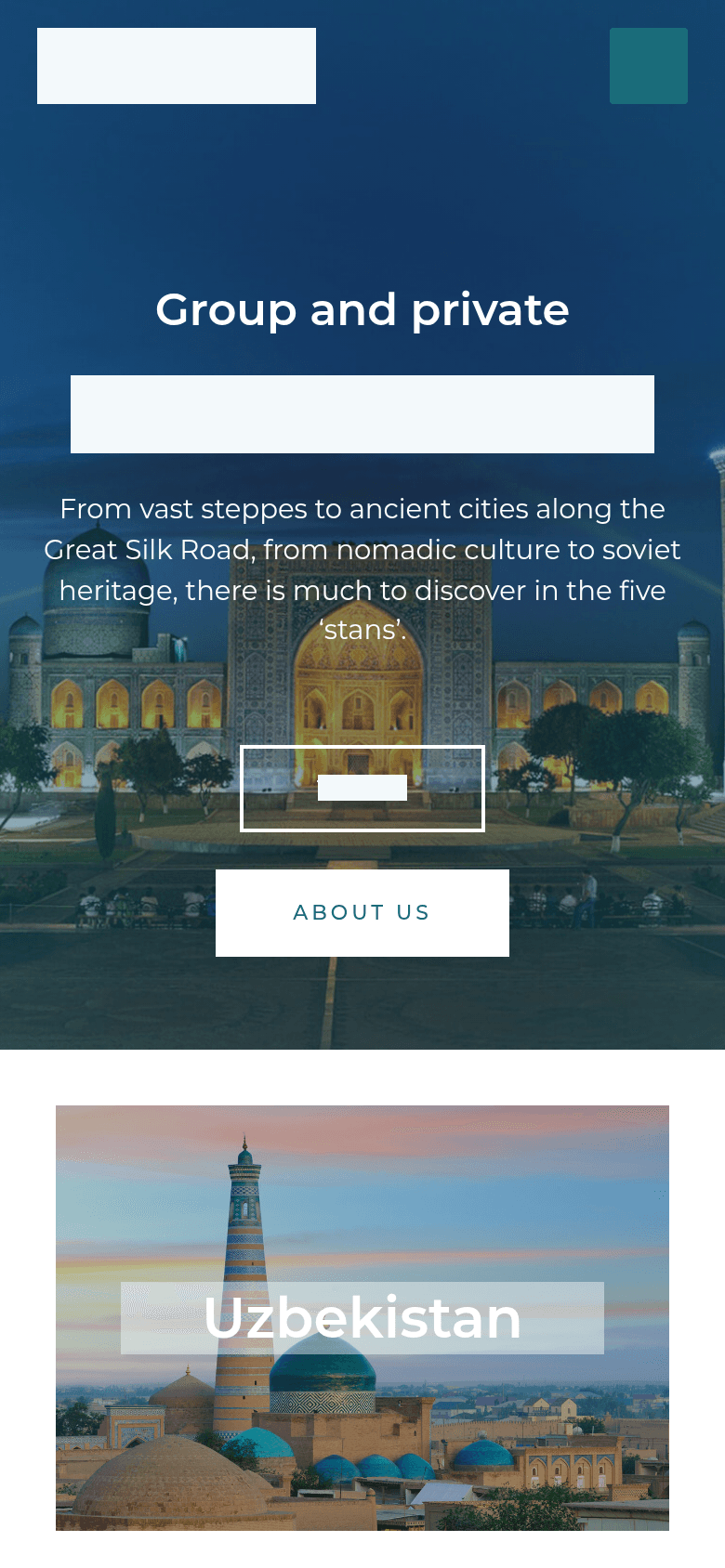
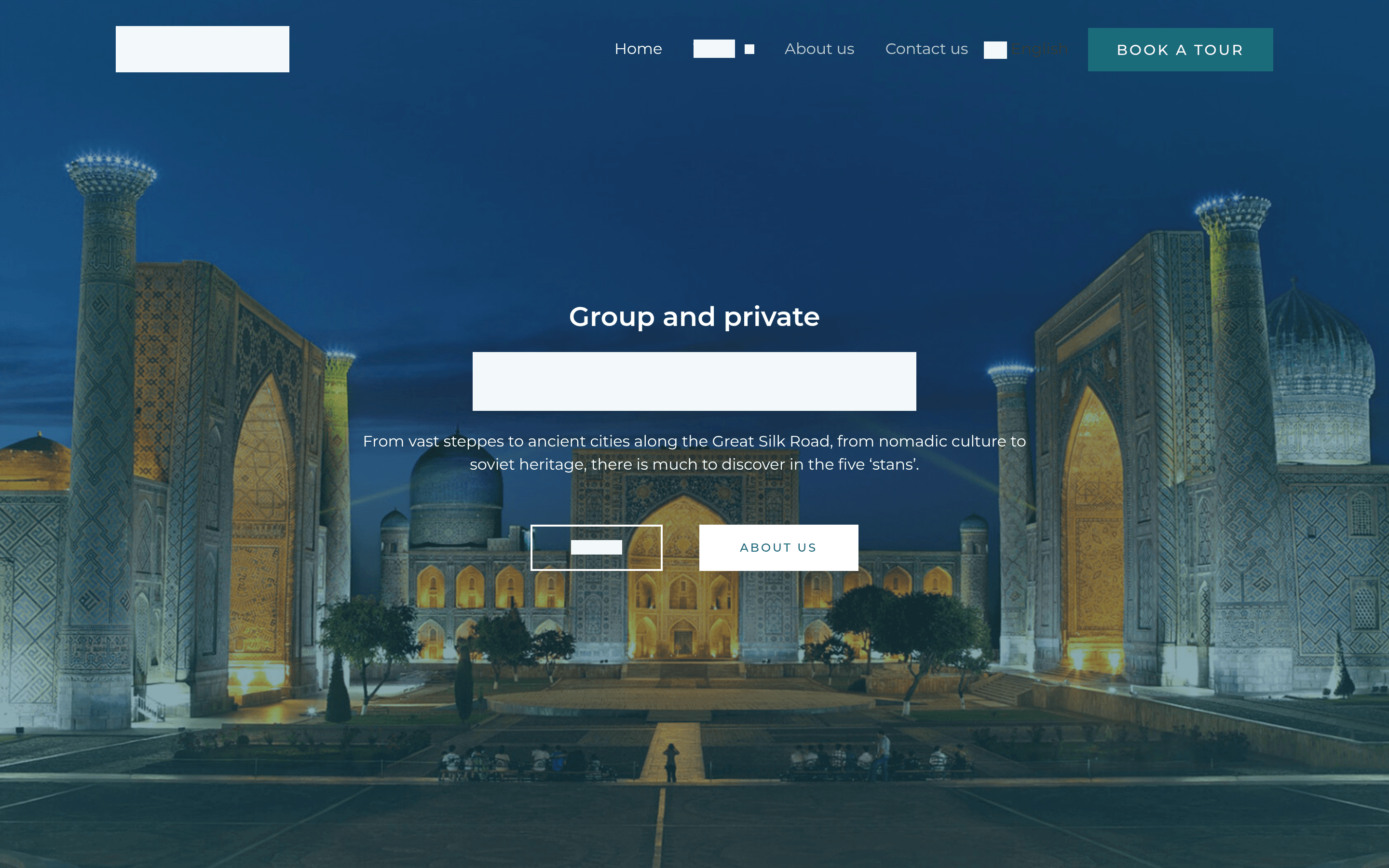
Screenshot taken 17.10.2026
What stops it from selling
No approximate tour prices are shown anywhere
What it costs the business. A traveler compares several agencies at once, and if a competitor shows a price range while this site shows none, the choice often goes against the silence. Some potential customers simply don't write or call, assuming prices are being hidden on purpose.
What we do. We add 'starting from' prices for the main tours and destinations, with a note on what affects the final cost — accommodation, season, group size. This doesn't commit the agency to selling at the lowest point. A day or two, together with the copy.
The first screen: no prices
There's no way to message directly on Telegram or WhatsApp from the site
What it costs the business. Travelers more often want to clarify details in a chat — compare a few dates, ask about a visa, send a photo of a passport — rather than call and wait for an answer over the phone. Without a messenger button, these inquiries are simply lost, and the agency never even finds out it missed them.
What we do. We place Telegram and WhatsApp buttons in the header, plus a separate floating one on the mobile version, with a pre-filled first message like 'I'd like to know about a tour.' A few hours of work.
The first screen: no Telegram or WhatsApp buttons
The phone number can't be tapped from a mobile phone
What it costs the business. Most visitors to a travel agency website arrive from a phone — often right in the middle of searching for a tour on the go or in the evening. If the number has to be copied manually, some people simply don't call: one extra step, and their attention has already moved to another tab.
What we do. We turn the number into a clickable link: tapping it opens the dialer right away. Half an hour of work.
Six pages on the site end with no call to action
What it costs the business. The homepage, the tours page, the Uzbekistan page, and a few others are exactly the pages a traveler reaches after already showing interest in a specific destination. If the page ends with no inquiry form or call button, even the warmest visitor has to go hunt for how to get in touch — and some leave at that exact step.
What we do. We add one clear action at the end of every page: an inquiry form or a one-tap call button. A day of work for the whole site.
A tour link looks bare when shared in messengers
What it costs the business. Travelers often recommend the agency to each other by simply sharing a link in Telegram or WhatsApp — it's natural word-of-mouth advertising. But without image and caption settings, the link unfolds as plain text, with no tour photo or title, and such links get clicked noticeably less often than a card with a picture.
What we do. We add an image and caption that pull through automatically when the link is shared in messengers and social networks. A couple of hours, including preparing the image.
The Russian and Uzbek versions of the site aren't linked for search
What it costs the business. In Osh and Uzbekistan, tours are searched for in both Russian and Uzbek — these are different people with different queries. If the language versions aren't linked correctly, Google confuses them and shows one instead of the other, rather than matching each language to its own audience.
What we do. We link the language versions the way Google expects. A few hours of work, if both versions already exist.
The site uses six different fonts across its pages
What it costs the business. A traveler doesn't think about fonts consciously, but the feeling of being 'pieced together' registers subconsciously — and for a travel business, where people trust the agency with money upfront for a trip, looking tidy and consistent matters.
What we do. We narrow it down to two fonts — one for headings, one for body text — and bring every page in line with them. A day of work.
The first screen: fonts do not form one set
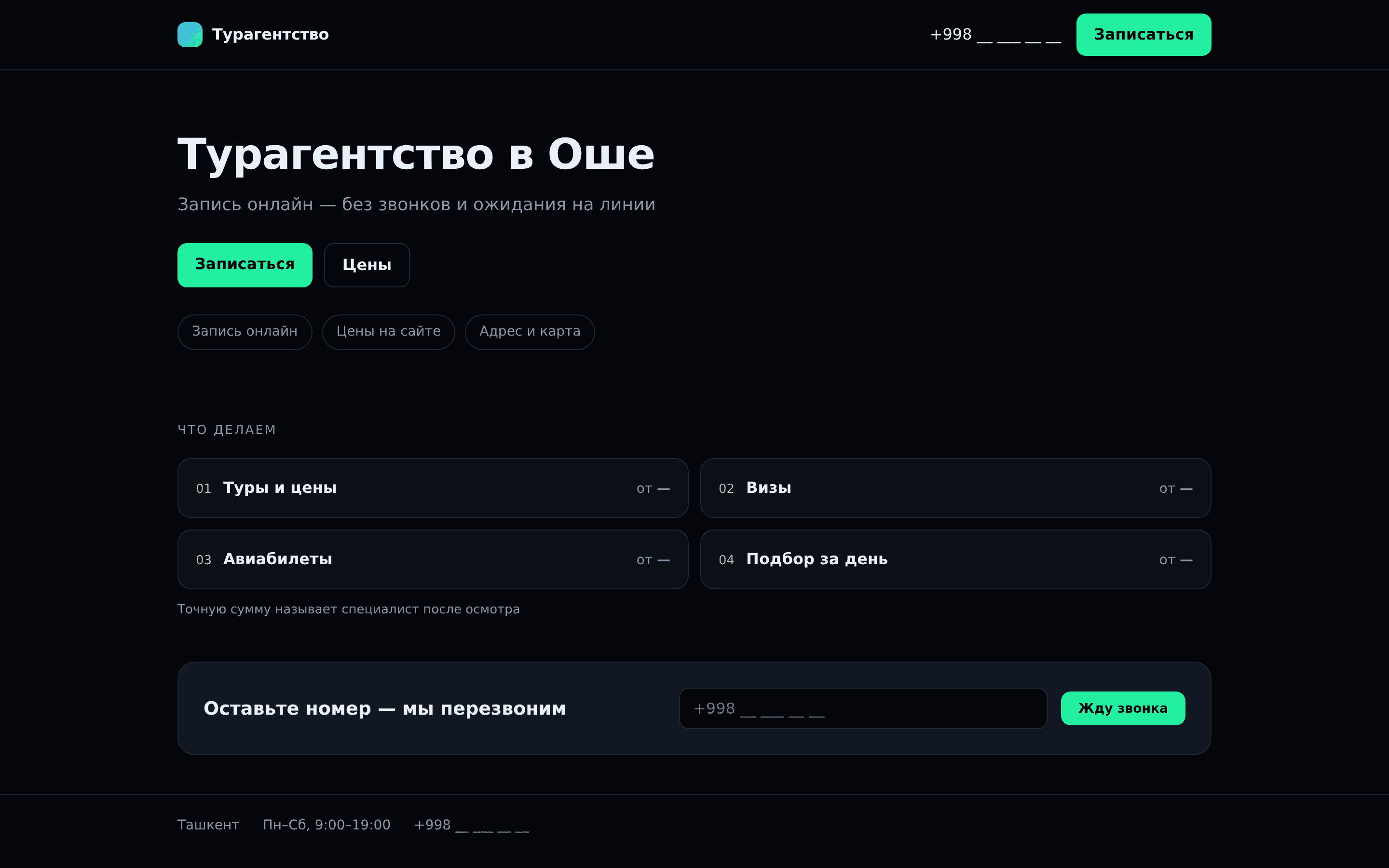
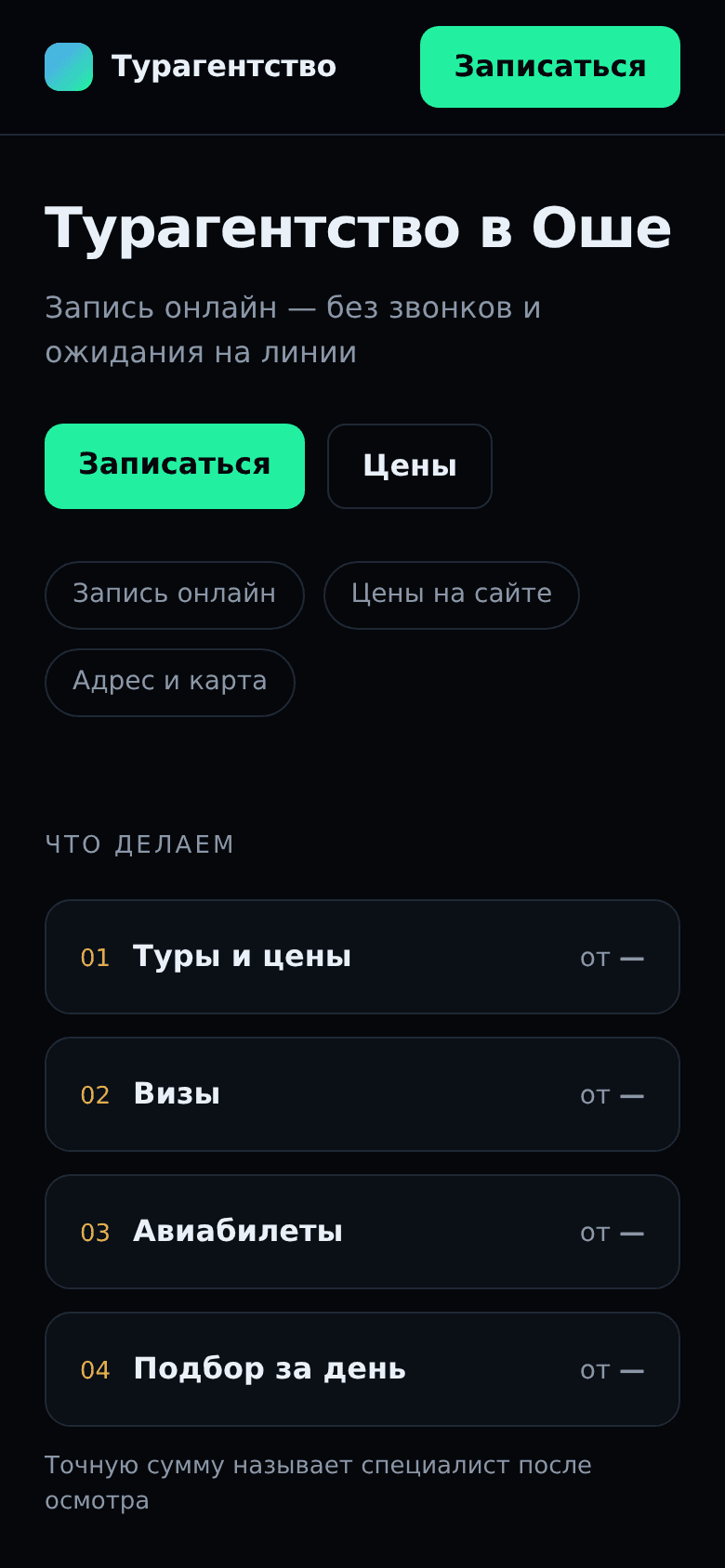
How we would build it
What this gives
After these fixes, a traveler searching for a tour to Osh will be able to message instantly or call with a single tap — without the extra steps that currently cause some inquiries to be lost.
Approximate prices and clear calls to action on every page answer some questions before the conversation even starts, and filter out visitors whose budget clearly doesn't match.
Tour links shared with friends will look like a tidy card instead of bare text — the most natural form of advertising for a travel agency.
A project of this scope at DevUz Studio starts from $2500 and takes 3-8 weeks.
What this costs
Out of every hundred people who reach the site ready to get in touch, roughly 36–65 are lost at these points.
This is an estimate based on our own stated assumptions, not a measurement of someone else's analytics: we do not know this site's traffic and do not make it up. We count per hundred visitors, and the share of every item is open in our code.