// real estate developer in Tashkent, WordPress website
Residential complex website in Tashkent: a teardown of a developer site that Google can't find
A real estate developer in Tashkent, with a residential complex website in Tashkent built on WordPress. This is a niche where decisions take months: a person browses dozens of residential complex sites, compares floor plans, handover dates and installment terms, and shows pages to a spouse, parents, a builder friend. The website here isn't a showcase — it's a participant in a long conversation about the biggest purchase a family will make.
The site itself is built carefully: it loads, it reads well, and it's clear what the company does. Technically it isn't slow either — time to first byte is 853 ms, the server responds briskly, and that part is fine. The overall audit score is 7.
But one line of code undoes everything else, and a handful of smaller things quietly cost leads right at the moment someone is almost ready to reach out. We go through them in order — from what's worth fixing today to what takes weeks but pays off the most.
As it is
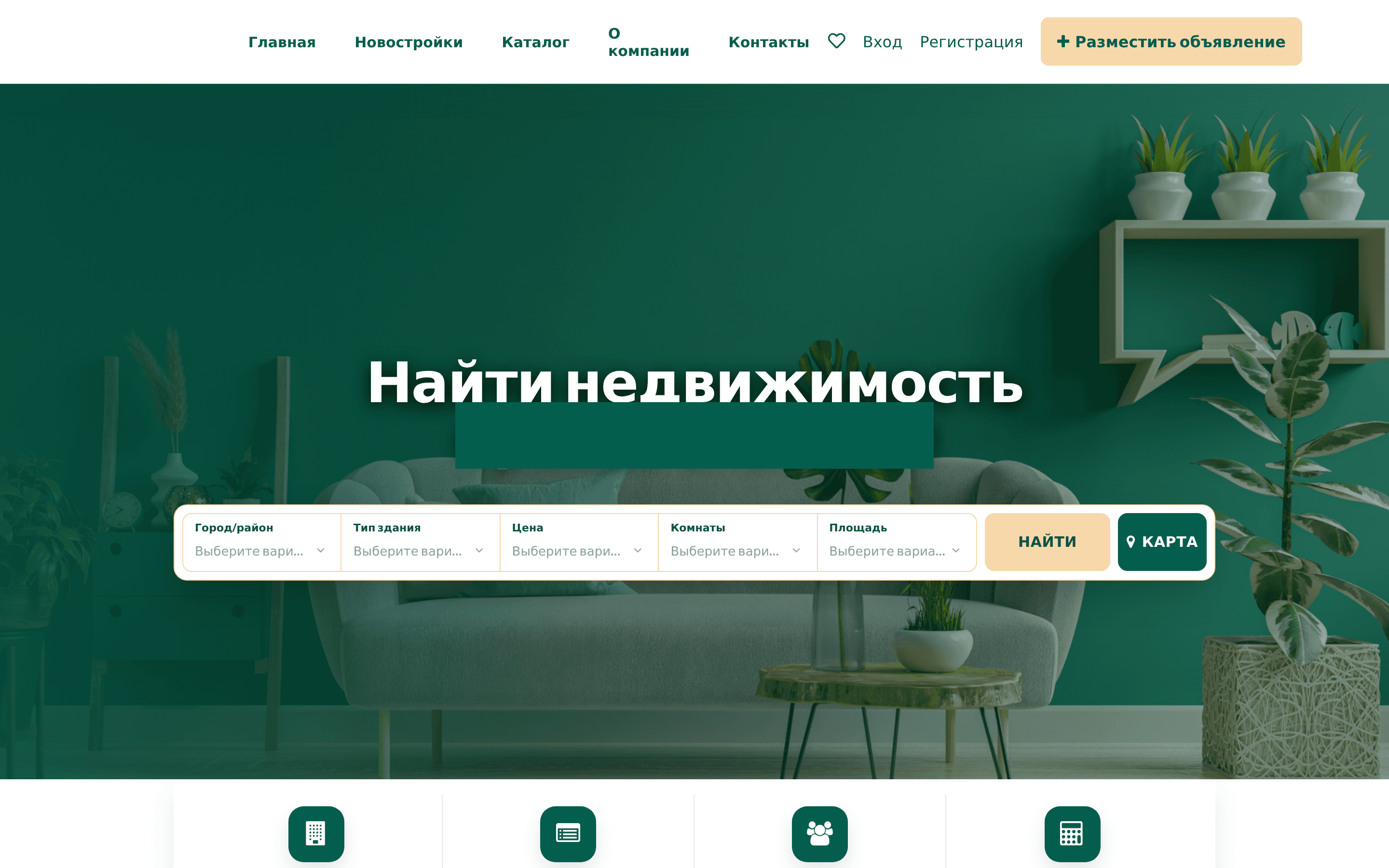
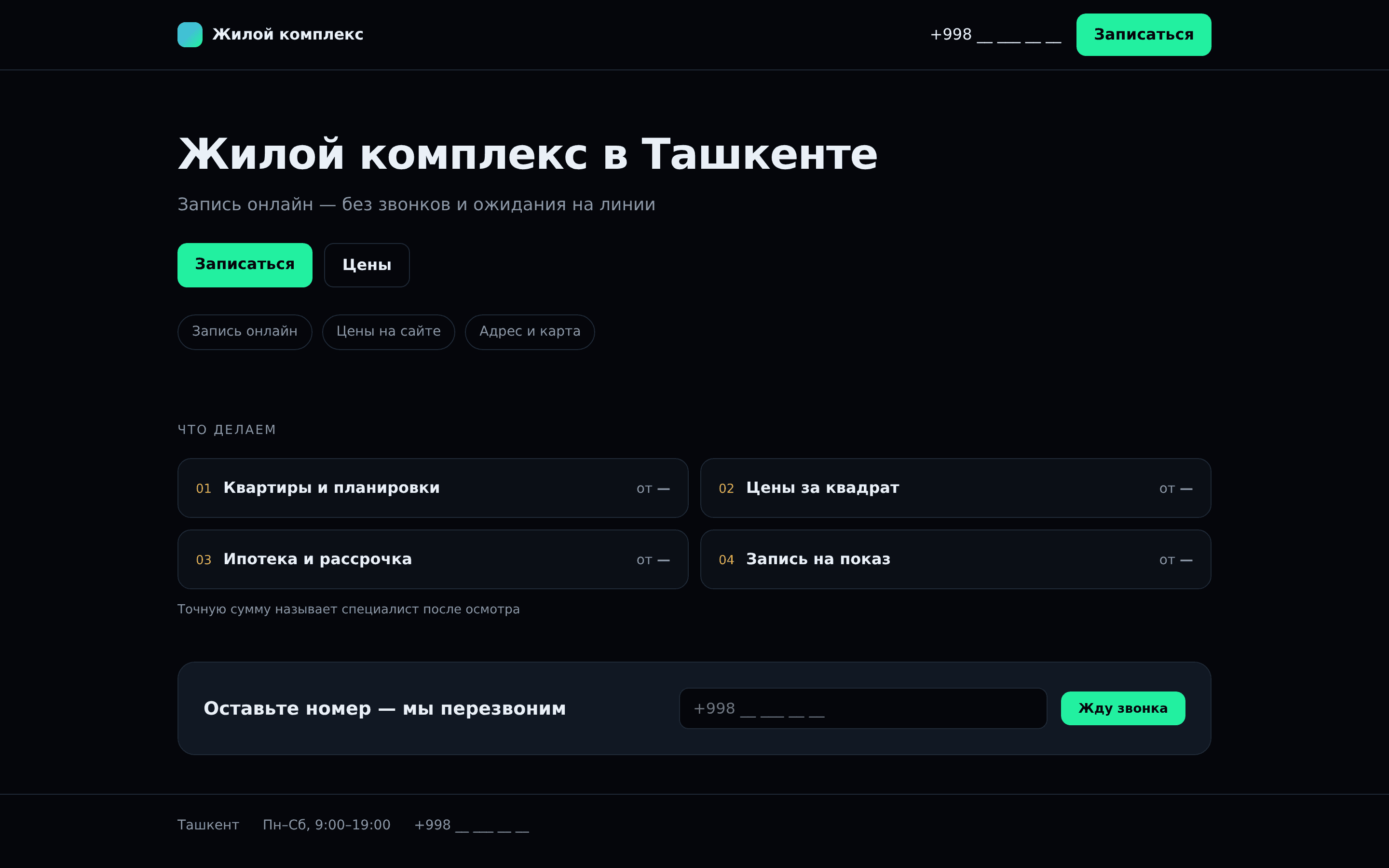
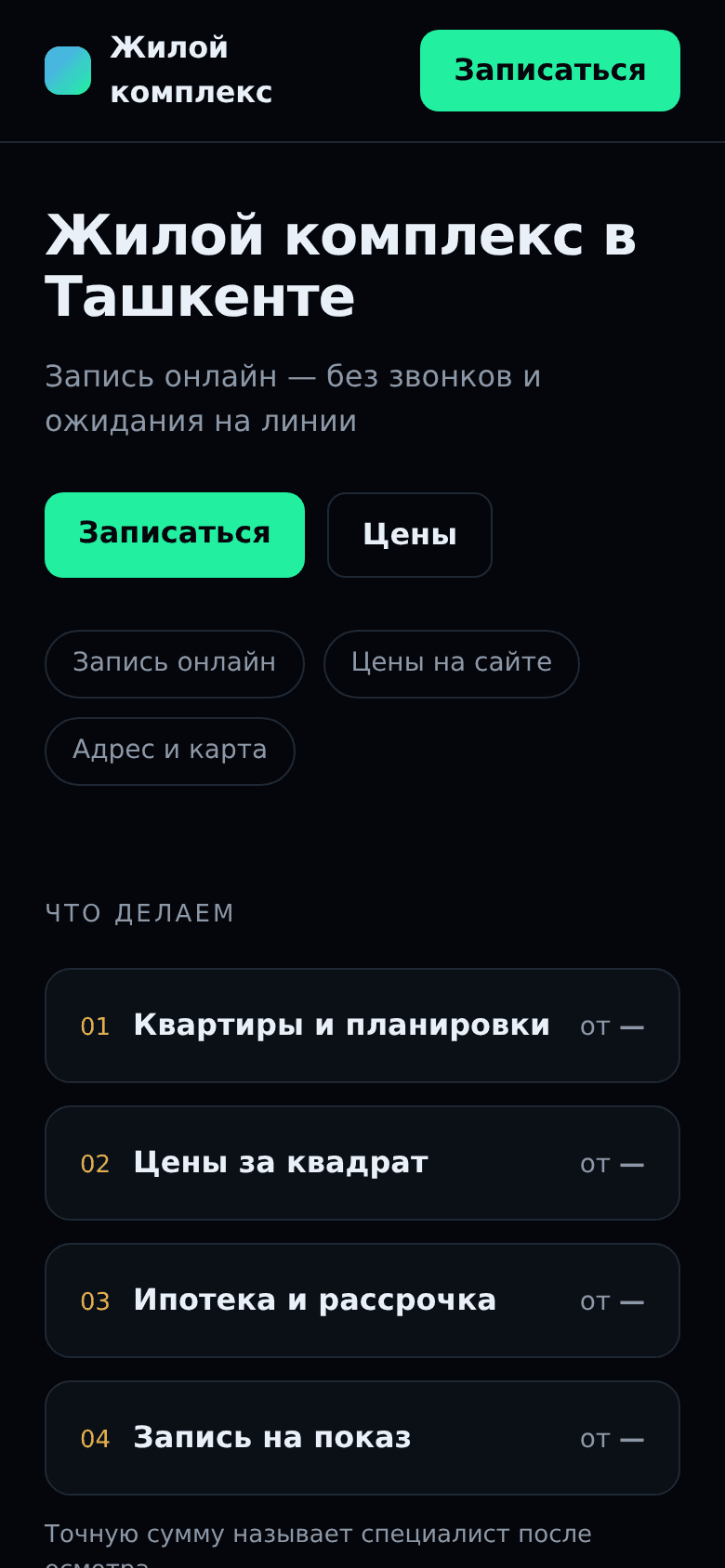
Screenshot taken 22.09.2026
What stops it from selling
The residential complex website isn't in search results — it's telling Google not to show it
What it costs the business. The page code contains a direct instruction not to show it in search. This is usually set during development and forgotten at launch. While it's there, anyone typing "new development in Tashkent" or searching for your complex by name won't find you — no matter how much text is written or how much was paid for the site. All the organic traffic the site was built for goes elsewhere, and in reports it just looks like "not enough people."
What we do. Remove the block and resubmit the pages for recrawling in Search Console. Half an hour of work; the site starts appearing in search within a few days.
Search engines may never find pages for individual buildings and floor plans
What it costs the business. There's no sitemap. A developer's site always has a branching structure: phases, buildings, unit types, an installment page, construction updates. Pages without a direct link from the homepage can take months for a crawler to reach, or never get reached at all. And those are exactly the pages that answer specific queries like "two-bedroom in a new development" — meaning they bring in people who already know what they want.
What we do. Set up a sitemap that updates itself as pages are added, reference it in robots.txt, and submit it to Search Console. A few hours.
Search engines are crawling the site blind
What it costs the business. The first file a crawler asks a site for is missing. Nothing breaks, but there's no way to tell it where the sitemap is or which service sections to skip. Crawl budget gets spent on search and filter pages instead of unit and building pages.
What we do. Write a robots.txt file with a link to the sitemap and block off service URLs. Half an hour.
Someone looked at a floor plan — and has nowhere to message you from the site
What it costs the business. There are no Telegram or WhatsApp buttons on the site. In Uzbekistan, messaging has long overtaken phone calls: asking "is the unit on the sixth floor still available?" is easier to type than to dial a number and wait through rings — especially in the evening, exactly when people are browsing floor plans. Without a button, these inquiries simply don't happen, and they don't show up in statistics either: it looks like there's no interest, when really there's just no way to express it.
What we do. Add Telegram and WhatsApp buttons — in the header and as a floating button on mobile, with a pre-filled first message like a question about a specific floor plan. A few hours.
The first screen: no Telegram or WhatsApp buttons
Nothing confirms it's safe to hand over money for an apartment at the foundation stage
What it costs the business. We looked across the whole site for reviews, completed projects, any kind of guarantee — and found nothing. For a developer this matters more than for almost anyone: a person is paying for something that doesn't exist yet, and they're looking for exactly one piece of proof — that someone else already paid and moved in. Without that, people choose based on price per square meter, and on price there's always someone cheaper.
What we do. Collect resident reviews with photos and names, publish five to seven completed projects and the construction progress of the current one, and spell out guarantees and terms in plain words. A few days, including gathering the material.
For some visitors the site looks broken, and the padlock in the address bar disappears
What it costs the business. The page loads over a secure address, but some images or scripts load over a plain one. Browsers block these files or show a warning. Someone comparing developers and ready to leave a phone number sees an "unsafe connection" warning instead — and goes to the next residential complex. In a niche where tens of thousands of dollars are at stake, that's enough.
What we do. Switch all internal addresses to a secure connection and remove external ones that don't support it. A few hours.
People forward the link to the complex to each other — and a bare address arrives
What it costs the business. Apartments get chosen as a family: the link gets sent to relatives in a chat, to a realtor friend, to a colleague. Right now, instead of a card with the building's facade and the complex's name, just a plain URL shows up. Links like that get clicked noticeably less — and the people forwarding it are exactly the ones already recommending you, the warmest traffic there is.
What we do. Add an image and caption for messengers and social media so the link unfolds into a clean card with a view of the complex. A couple of hours, including preparing the image.
In search results, the link is followed by a random scrap of text
What it costs the business. There's no meta description, so Google shows whatever text it finds first on the page. People read those two lines before clicking, comparing them against other developers in the list. When competitors show handover dates and installment terms, and you show a broken sentence fragment, people choose the competitors.
What we do. Write descriptions for the homepage and main pages — two sentences each, written like a human, without corporate jargon. An hour or two.
How we would build it
What this gives
The site starts appearing in search for queries about new developments and for the complex's name — right now that traffic doesn't exist at all, and it's the most expensive loss of all.
There's now a way to message from a phone in one tap: some of the people who today just close the tab become a conversation in Telegram.
Resident reviews and completed projects remove the buyer's main fear at the construction stage — the conversation stops being only about price per square meter.
A link forwarded in a family chat looks like a card for your residential complex, not a bare line of text.
What this costs
Out of every hundred people who reach the site ready to get in touch, roughly 17–37 are lost at these points.
This is an estimate based on our own stated assumptions, not a measurement of someone else's analytics: we do not know this site's traffic and do not make it up. We count per hundred visitors, and the share of every item is open in our code.