Skip to content
DevUzDevUz Studio

// hotel in Tashkent

Teardown: why a hotel website in Tashkent is losing bookings

Here's a hotel website in Tashkent — six pages: home, about the hotel, contacts, and a few internal pages. It's built carefully: the site loads fast, time to first byte is 552 ms, and our overall score is 71. That's a solid technical foundation, it's in good shape, and there's no need to rebuild it.

But a hotel doesn't live on technology, it lives on bookings. And here the site behaves as if the visitor has already decided to stay here and is just looking up the address. In reality they're still choosing between four options open in one tab, and the decision comes down to two things: how much a night costs and how fast they can ask about available dates.

We went through the site as an ordinary visitor looking for a place to stay in Tashkent for a couple of nights would. We weren't looking at the code, but at what stops them from writing in or booking. Below are four things we found, and what to do about each one.

As it is

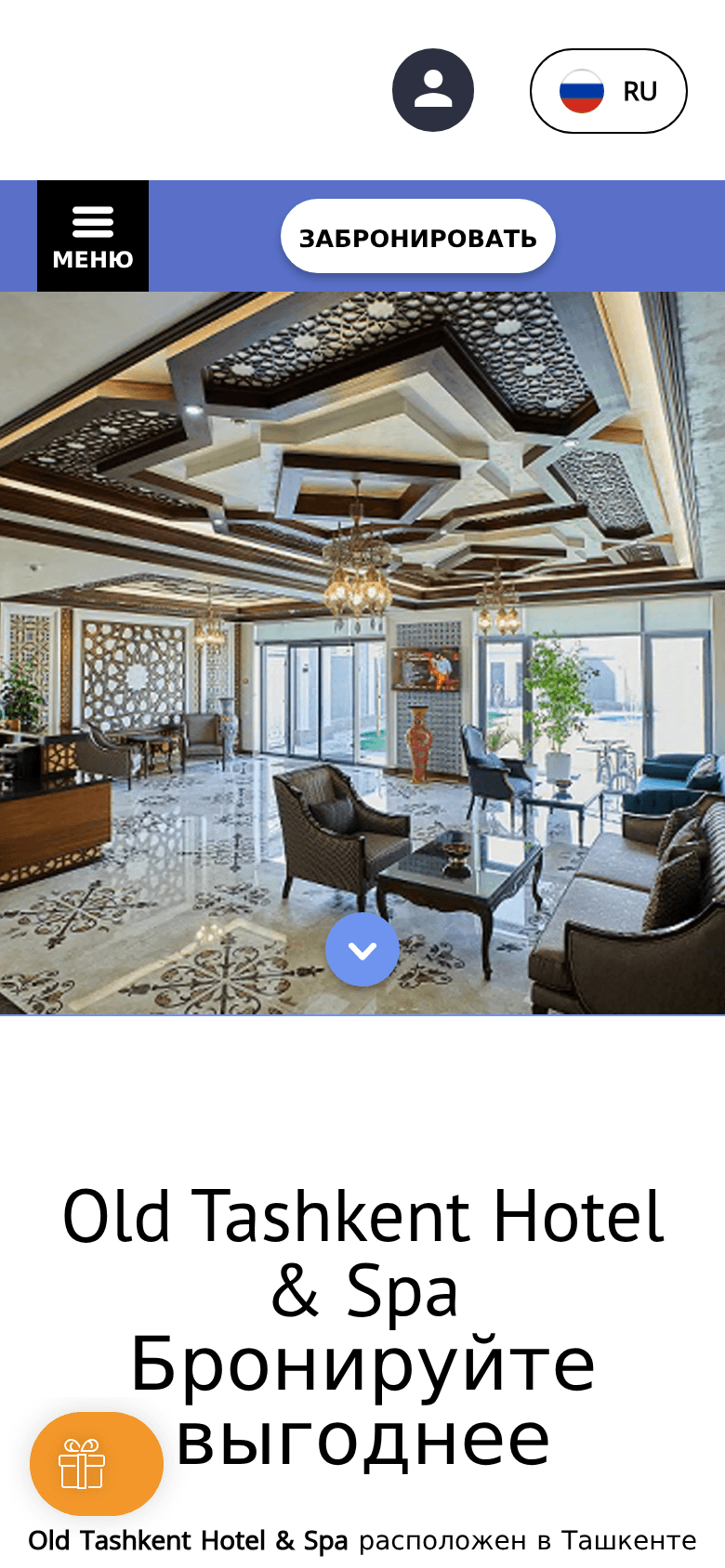
As it is: hotel in TashkentAs it is: hotel in Tashkent — 390px

Screenshot taken 02.10.2026

What stops it from selling

The site doesn't answer the guest's main question — how much a night costs

What it costs the business. A person choosing a hotel in Tashkent has several tabs open at once. Three of them state the price per night, yours doesn't. Some guests will write in and ask, but most will just close the tab: silence about price reads as "expensive" or "they'll tell you over the phone once they've sized you up". Worst of all, these people never show up in any statistics — you'll never know about them.

What we do. We add prices by room category as a range, "from and up to", since the hotel has seasons, weekends, and long stays. Right next to it, a short note on what affects the final number: dates, length of stay, breakfast. This doesn't commit you to selling at the lower end, but it filters out people who can't afford it anyway, and brings in those who already agree with the figure. A day or two, texts included.
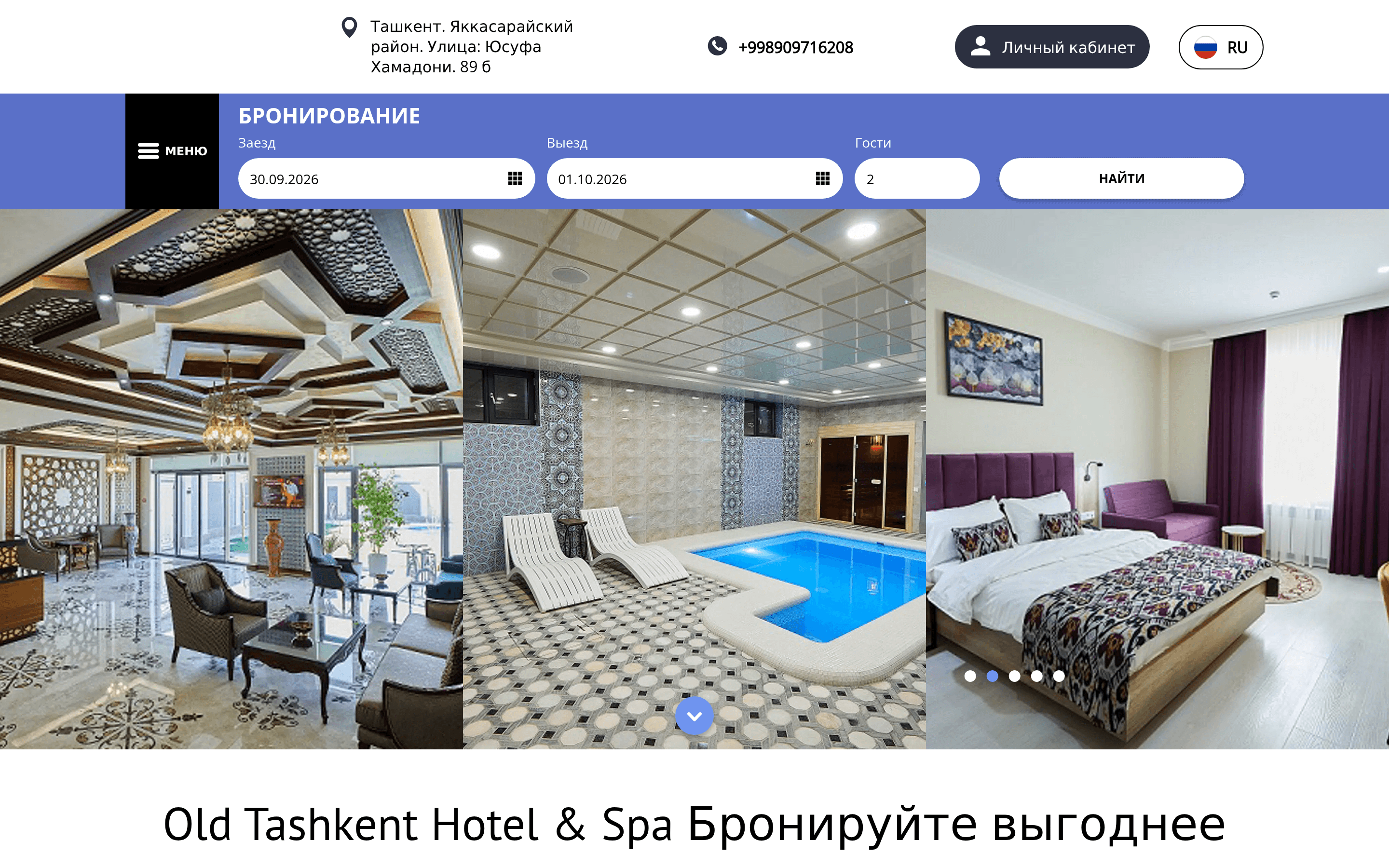
The first screen: no prices: The site doesn't answer the guest's main question — how much a night costs
The first screen: no prices

The price can't be found on any of the six pages

What it costs the business. We deliberately went through the entire site — home, about the hotel, contacts, and the rest — and found the cost of staying nowhere. So it's not that the price is hidden on some deep page: it simply isn't there at all. As a result, the hotel competes with its neighbors not on rooms or service, but on the visitor's patience — whether they have the energy to write in and wait for a reply. Few do.

What we do. We set up a separate rooms-and-prices block on the homepage and a full "Rooms & Rates" page with photos, capacity, and cost. We put a link to it as the first menu item after the homepage. A day or two, texts included.

The first screen: no prices here or on inner pages: The price can't be found on any of the six pages
The first screen: no prices here or on inner pages

There's no way to message on Telegram or WhatsApp from the site

What it costs the business. A guest looking for a place to stay usually asks about specific dates — a one-line question. Typing that into a messenger takes twenty seconds; calling is a different matter entirely, especially if someone is writing in the evening, from another city, or from abroad, where a call costs money. Without a messenger button, these inquiries simply never happen: people won't retype a phone number into their contacts, they'll go to a site that has the button.

What we do. We add Telegram and WhatsApp buttons to the header and a separate floating button on mobile, visible on any screen. The first message comes pre-filled with something like "Hello, I'd like to check room availability for these dates...", so the guest doesn't have to figure out how to start. A few hours of work.

The first screen: no Telegram or WhatsApp buttons: There's no way to message on Telegram or WhatsApp from the site
The first screen: no Telegram or WhatsApp buttons

The pages mix four different fonts

What it costs the business. People choose a hotel based on a sense of tidiness: if the site looks pieced together, that impression subconsciously carries over to the cleaning, the bedding, the order at the front desk. Four fonts on one site create exactly that impression — as if the pages were made at different times by different people. The visitor won't name the reason, they'll just pick a neighbor instead.

What we do. We keep two fonts — one for headings, one for body text — and apply them across all six pages: menu, room descriptions, contacts, photo captions. A day of work, and the site starts reading like one hotel, not a folder of mismatched documents.

The first screen: fonts do not form one set: The pages mix four different fonts
The first screen: fonts do not form one set

What this gives

The guest sees room prices right away — and either writes in already comfortable with the number, or leaves on their own, without taking up front-desk time with "can you do it cheaper".

Inquiries start coming in through Telegram and WhatsApp: questions about available dates arrive in the evening and on weekends, when people won't call but will happily write.

The site stops looking pieced together, and trust in the hotel builds before the guest even opens the room photos.

The technical foundation is already solid — 552 ms to first byte — so the work isn't about rebuilding everything, but about what directly turns a visitor into a booking. This kind of rework with us runs from $2500, 3-8 weeks.

What this costs

Out of every hundred people who reach the site ready to get in touch, roughly 25–47 are lost at these points.

This is an estimate based on our own stated assumptions, not a measurement of someone else's analytics: we do not know this site's traffic and do not make it up. We count per hundred visitors, and the share of every item is open in our code.

Price and timeline

from $2500, 3-8 weeks

Order a website for a business like this →

We do not name the company or link to it. This is about typical mistakes, not specific people; the name and logo on the screenshot are covered.

Want the same teardown of your own website?

Check my website