Skip to content
DevUzDevUz Studio

// training center in Tashkent

Training center website in Tashkent: a teardown of why inquiries don't come in

A training center website in Tashkent is a business where decisions get made fast and almost always by comparison. A visitor opens three or four course websites, checks the programs, looks for pricing and schedules, and within a few minutes decides who to message. The site isn't acting as a showcase here — it's standing in for the first conversation with an admin. If it answers evasively, the conversation is over.

Technically, the site isn't in bad shape: the server responds in 199 ms, so the page starts loading fast and people don't bail on a blank screen. The problems sit in a different layer — the site leaves things unsaid and in places looks abandoned. The overall audit score is 49: a middling result, the kind you usually fix with a couple of weeks of work rather than a rebuild from scratch.

Below are six issues we found. For each one: what a person looking for courses actually sees, what it costs the center in terms of group sign-ups, and how long the fix takes.

As it is

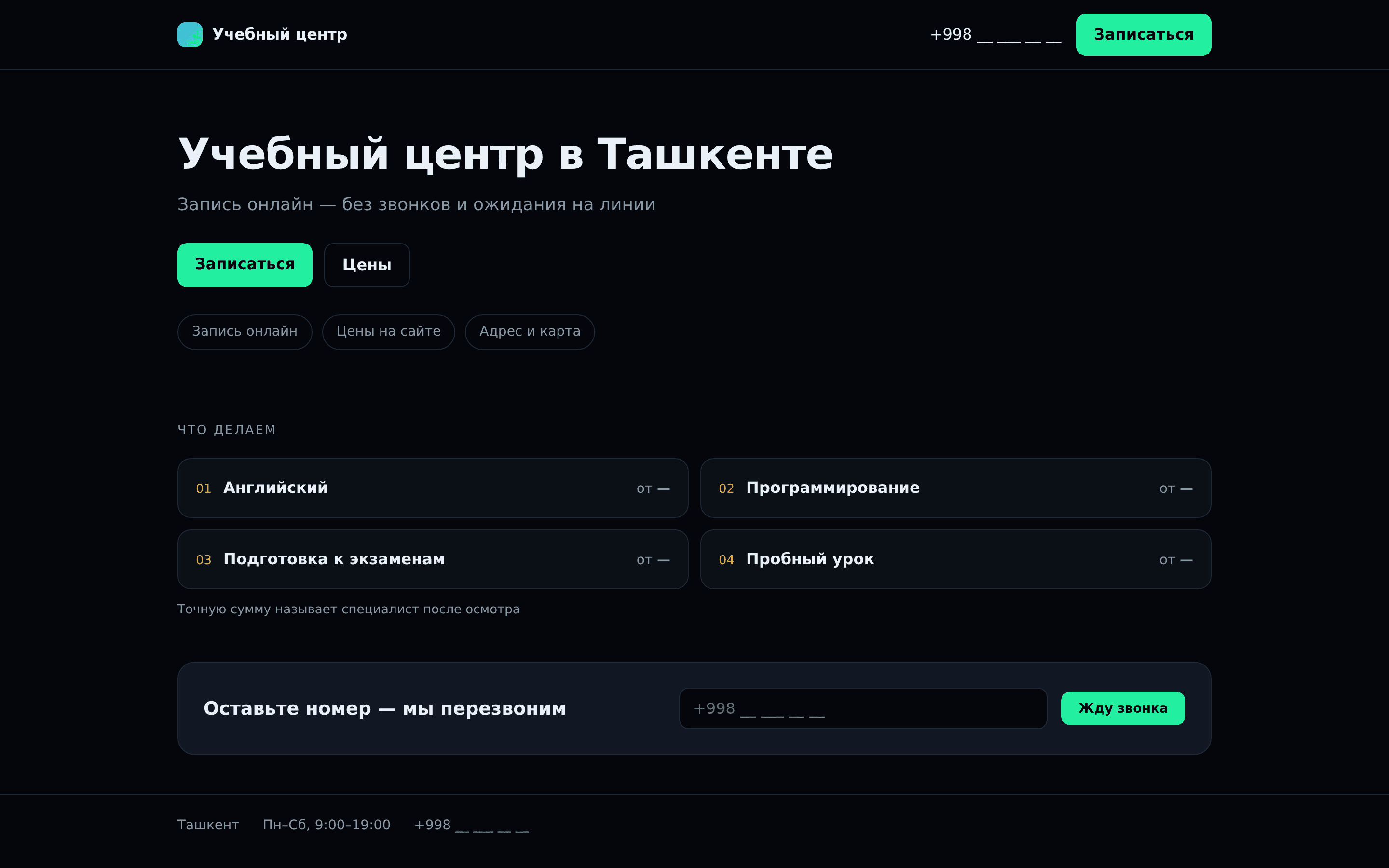
As it is: training center in TashkentAs it is: training center in Tashkent — 390px

Screenshot taken 24.09.2026

What stops it from selling

The site says nothing about the cost of courses

What it costs the business. "How much is a month of classes" is the first question any parent or adult student asks, and the site stays silent. Some people will message and ask anyway, but most will simply open the next center's site, where the price is stated. Staying quiet about price reads as either "it's expensive" or "they'll name a number once they see how much they can get out of you" — both read badly. There's also a hidden cost: the admin spends time messaging back and forth with people the price was never going to suit.

What we do. We set a range per program — "from X to Y" per month or per course — and explain next to it what drives the final number: group format, duration, intensive vs. regular schedule. This doesn't force selling at the low end, but it filters out the wrong leads before the call ever happens. A day or two, including copy.

The first screen: no prices: The site says nothing about the cost of courses
The first screen: no prices

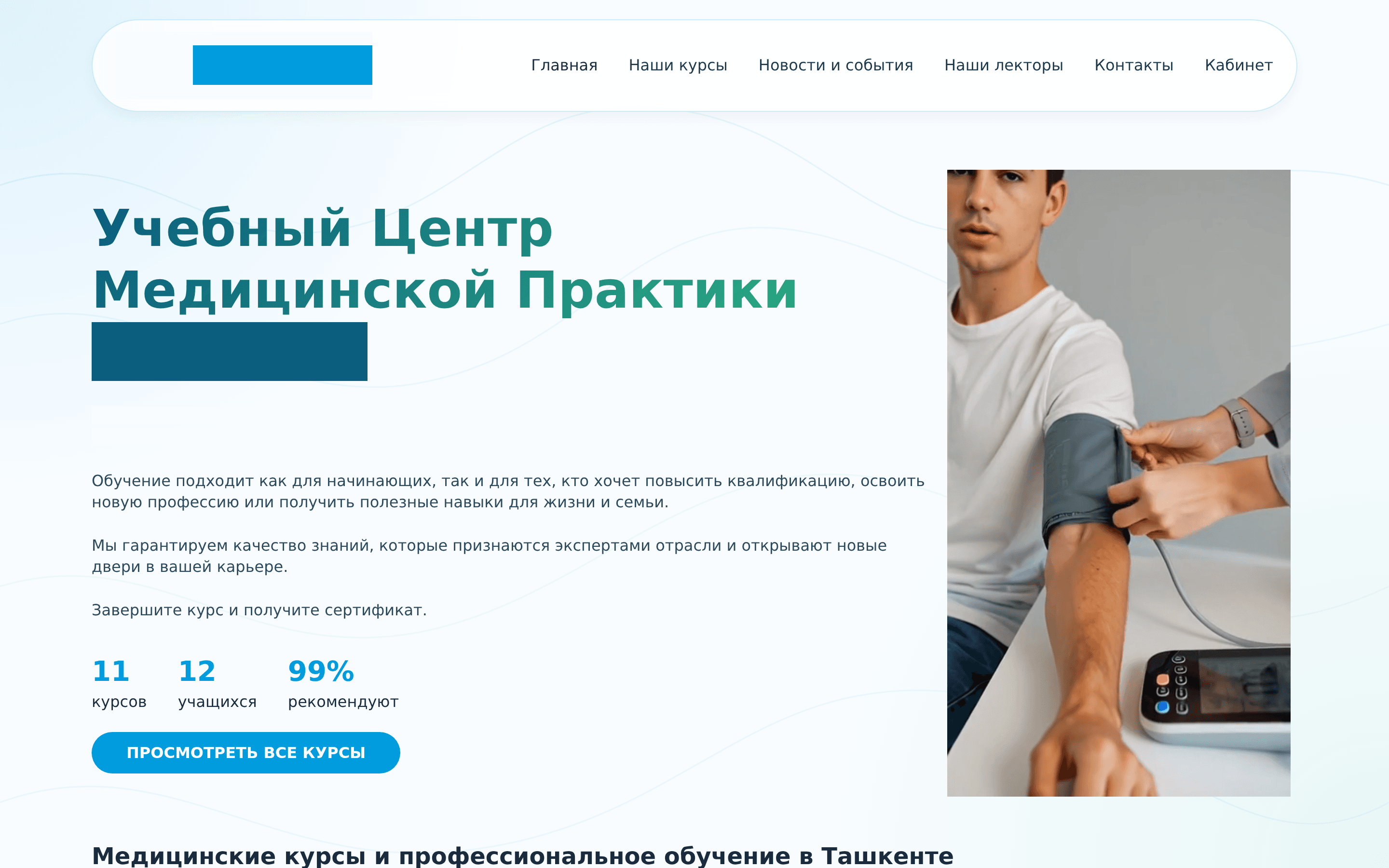
Three photos on the homepage are empty squares instead

What it costs the business. Out of the first six images checked, three don't load — a broken-image icon sits in their place. This is on the homepage, so everyone sees it. For a training center, photos of classrooms, teachers and classes are half the argument, and instead visitors get proof that nobody has looked after the site in a while. The conclusion carries over to the center itself: if the homepage got neglected, will the class schedule get the same treatment?

What we do. We locate the missing files or source replacements, restore the links, then check the rest of the pages the same way — broken images rarely show up alone. A couple of hours.

Search engines can't see the internal course pages

What it costs the business. A sitemap is a list of all pages that search engines read instead of having to discover them by following links. For a training center, it's the individual course pages that bring in the warmest visitors: people search for a specific program, not "training center" in general. Without a sitemap, pages with no direct link from the homepage can take months for a crawler to find — or never get found at all — and those searches go to competitors.

What we do. We set up a sitemap that updates itself whenever a new course is added, register it in robots.txt, and submit it to Search Console. A few hours.

The Russian and Uzbek versions compete with each other in search

What it costs the business. In Tashkent, people search for courses in both Russian and Uzbek, and these are different audiences with different phrasing. When language versions aren't technically linked, Google treats them as separate pages on the same topic and shows one or the other somewhat at random, regardless of which language the search was in. A visitor lands on the version they didn't mean to read and leaves, even though the right page exists on the site.

What we do. We link the language versions the way Google expects and check the pages match up pair by pair. A few hours, assuming both versions already exist.

Photos of classes have no labels for search engines

What it costs the business. Six out of ten images have no text label in the markup. Google doesn't look at images — it reads the label. As a result, photos of classrooms, graduating groups and course materials don't show up in image search, which is a whole separate stream of people who want to see what the place looks like before they bring their child there. The same labels are read aloud by screen readers for the visually impaired.

What we do. We label images by meaning — what program, what room — instead of "photo1". For a site with a few dozen images, that's a day of work.

An image with no description for search: Photos of classes have no labels for search engines
An image with no description for search

The browser tab is blank and unnamed

What it costs the business. Someone comparing courses keeps several tabs open at once and switches between them. Yours is the one with the blank square, and it gets closed first because nobody remembers whose tab it is. In bookmarks and on a phone's home screen the site looks just as anonymous — and for a training center, a bookmark often sits there for weeks while someone consults with family.

What we do. We build an icon from the logo in all the sizes needed — for the tab, bookmarks, and the phone home screen icon. An hour.

How we would build it

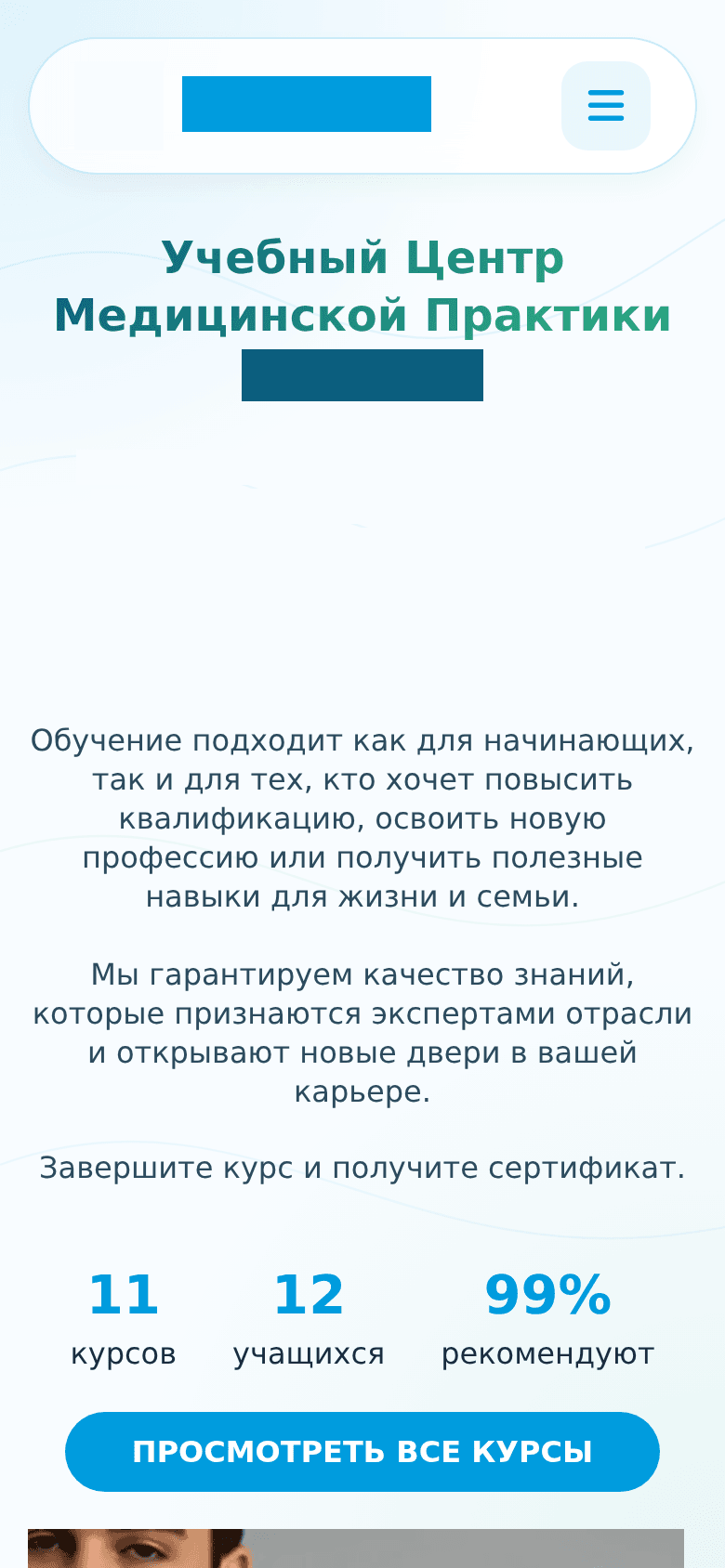
How we would build it: training center in TashkentHow we would build it: training center in Tashkent — 390px

What this gives

Visitors learn the cost of courses before deciding to reach out, and the admin only hears from people already comfortable with the price range.

Individual course pages start showing up in search, bringing in people with a specific request rather than just general interest.

Russian- and Uzbek-speaking visitors each land on their own version of the site instead of a random one.

The site stops looking abandoned: whole photos, a tab icon, labeled images — small things that build trust in the center before the first visit.

What this costs

Out of every hundred people who reach the site ready to get in touch, roughly 29–59 are lost at these points.

This is an estimate based on our own stated assumptions, not a measurement of someone else's analytics: we do not know this site's traffic and do not make it up. We count per hundred visitors, and the share of every item is open in our code.

Price and timeline

from $2500, 3-8 weeks

Order a website for a business like this →

We do not name the company or link to it. This is about typical mistakes, not specific people; the name and logo on the screenshot are covered.

Want the same teardown of your own website?

Check my website

More teardowns in this niche